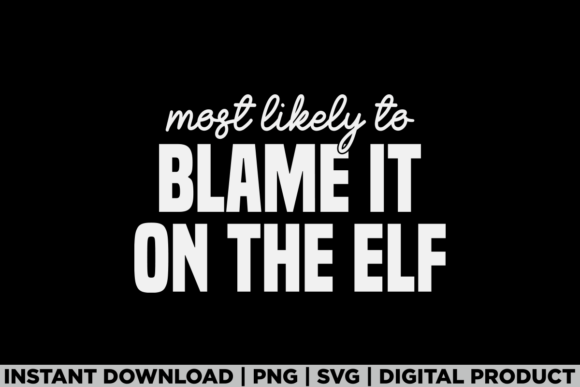
Most Likely to Blam It on the ELF Graphics
As a designer who regularly works with branding, marketing visuals, and digital design assets, I often evaluate creative design elements for real client projects. Most Likely to Blam It on the ELF is a graphic that immediately catches the eye with its playful yet polished aesthetic. This design is perfect for adding a touch of humor and personality to t-shirt designs, printable wall art, or social media graphics.
First Impressions and Visual Mood
The first thing that stands out about Most Likely to Blam It on the ELF is its lighthearted tone. The design features a whimsical character that feels like it could be part of a holiday card, a handmade gift, or a themed t-shirt. The visual style is modern and clean, with a focus on bold lines and clear typography. This makes it ideal for small business branding, Etsy products, or print-on-demand items where a friendly and approachable vibe is essential.
This design fits well in projects that aim to connect with a broad audience, especially those targeting families, friends, or individuals looking for unique and fun creative design elements. Its versatility allows it to work across various mediums, from t-shirt designs to Canva templates and Cricut projects.
Real-World Design Applications
When considering how Most Likely to Blam It on the ELF performs in real design situations, it's clear that this graphic design asset shines in larger layout areas. Whether used as a hero graphic for a seasonal campaign or as a decorative accent on product mockups, the design holds up well without feeling cluttered or overwhelming.
It also works effectively in packaging design, where it can add a memorable visual element to product labels or promotional materials. For a handmade business or boutique product line, this design could serve as a key component in creating a cohesive brand identity that feels both professional and personal.
In digital spaces, Most Likely to Blam It on the ELF can enhance social media graphics, blog visuals, or editorial design pieces. Its bold style makes it easy to recognize and remember, which is crucial for audience engagement and brand recall.
Best Use Cases
This design excels in scenarios where a strong visual presence is needed. Large layout areas, such as posters, flyers, or website banners, are ideal for showcasing the full impact of the design. It also works well as a supporting brand element in campaigns that require a consistent and recognizable visual language.
For commercial design, this graphic can be a valuable addition to a design bundle or a sublimation design collection. Its clarity and simplicity make it suitable for t-shirt designs, mugs, tote bags, and other merchandise that requires high-quality printable design assets.
Additionally, it’s a great fit for printable wall art, sticker design, or Canva templates where users want a quick and effective visual solution. Its adaptability ensures that it can be used across multiple platforms without losing its appeal or functionality.
Cautionary Considerations
While Most Likely to Blam It on the ELF is a strong design asset, it may not be the best choice for every project. In small sizes or crowded layouts, the details can become lost, making it less effective. Similarly, in minimalist branding or professional corporate materials, the playful nature of the design might not align with the desired tone.
Designers should also be cautious when using this graphic on complex backgrounds or in low-contrast environments. Ensuring that the design remains legible and visually appealing across different contexts is essential for maintaining a polished final result.
Impact on Design Projects
When integrated into a design project, Most Likely to Blam It on the ELF can significantly influence readability, hierarchy, and emotional appeal. Its clear visual structure helps guide the viewer’s attention, making it easier to communicate key messages or brand values.
For small business branding or handmade businesses, this design can help build visual trust and recognition. Its friendly and approachable style can create a stronger connection with the target audience, leading to increased engagement and customer loyalty.
However, designers must also consider how this graphic aligns with the overall brand strategy. If the project requires a more serious or sophisticated look, this design may need to be used sparingly or paired with other elements that balance its playful nature.
Practical Designer Notes
Before using Most Likely to Blam It on the ELF for a client project, it’s important to test it in black and white to assess its effectiveness without color. Checking contrast on light and dark backgrounds ensures that the design remains visible and impactful in all settings.
Previewing the design at different sizes helps determine how it will appear in real-world applications, whether on a t-shirt, a social media post, or a product mockup. Testing print quality is also crucial, especially if the design is intended for physical merchandise or printed materials.
Reviewing file formats, such as SVG or PNG, ensures that the design is compatible with various design software and platforms. For digital sellers or print-on-demand businesses, confirming commercial licensing is a must to avoid any legal issues down the line.
Finally, comparing the design with different font styles—such as serif, sans serif, script, or display fonts—can help determine how it interacts with text elements and enhances the overall visual hierarchy.